Permanent vacation lights have actually moved well past novelty status. A couple of years earlier, a lot of house owners still saw them as a high-end product, something for high-end personalized homes or individuals who merely never ever wanted to climb a ladder once again. Now they being in a more sensible category. Homeowners compare them to landscape illumination, safety and security cameras, irrigation systems, and various other irreversible upgrades that improve both comfort and aesthetic appeal.
That change issues, since irreversible lights are not simply a bigger variation of the momentary strands you purchase in a box every December. They entail electrical wiring, controls, mounting systems, preparation, solution access, and a long-lasting partnership with the outside of your home. When they are mounted well, they look clean, go away into the architecture during the day, and provide you flexible lights for holidays, video game days, birthdays, yard evenings, and easy accent lights all year. When they are set up badly, they can look clunky, fall short early, or develop a maintenance migraine that never fairly goes away.
If you are taking into consideration Long-term Holiday Lights, the appropriate concern is not simply, "How much do they set you back?" It is, "What am I truly purchasing, and what trade-offs feature it?"
The actual appeal is not just Christmas
Most customers start the conversation because they are tired of hanging seasonal lights. That is easy to understand. Ladders, extension cables, clips, storage space containers, burned-out bulbs, and cold-weather weekends shed their charm fast. Yet the greatest debate for a long-term system normally appears after setup, when the owner starts using it for other moments.
A well-designed system can change from Christmas shades to refined brownish-yellow illumination for a supper party, team colors for a playoff game, red and blue for the Fourth of July, purple and orange for Halloween, or soft white accents for day-to-day curb appeal. That year-round utility is where the value begins to feel more rational. You are not paying for a one-month design. You are paying for a permanent outside lights feature.
That said, not every house owner desires a color-changing roofline. Some favor a quieter appearance, especially on typical homes, block colonials, craftsman homes, or upscale neighborhoods where flashy results can feel out of area. In those cases, Traditional Warm Soft Lights typically make more sense than intense animated scenes. I have seen several purchasers presume they need every app-driven feature readily available, just to find that what they actually wanted was a tidy, classy warm-white radiance that matches your home instead of carrying out on it.
The ideal systems allow you do both. You can run computer animated shade programs when the occasion asks for it, after that go back to downplayed warm illumination for the various other 330 days of the year.
Your residence determines more than you think
Permanent lighting systems are extremely dependent on architecture. Rooflines, soffits, fascia boards, dormers, gables, access overhangs, gutters, and trim information all affect what is possible and what will certainly look good.
An easy cattle ranch home with long straight eaves is normally much easier and more economical to light than a high roofline with several optimals and a mix of materials. A two-story home with very easy soffit accessibility presents a various setup challenge than a home with limited attic room access, slim trim surface areas, or sections exposed to heavy wind.
Material matters too. Aluminum fascia acts differently from timber. Brick and stucco need various approaches. If a home currently has aging trim, rot, loose seamless gutters, or peeling off paint, those troubles ought to be dealt with prior to lighting goes in. Setting up over a stopping working exterior surface area is a typical faster way, and it often returns to attack the house owner later.
One of the clearest indications of an excellent installer is that they hang out taking a look at the house prior to they talk too much about patterns and apps. They need to ask where you want the lights to be visible from, whether daytime concealment matters, and whether your goal is joyful shade, refined building highlighting, or a mix of both. A house with great deals of aesthetic intricacy can benefit from restraint. A plain façade may require extra thoughtful positioning to avoid looking sparse.
Permanent LED Illumination Installment is a finish trade, not simply an electric job
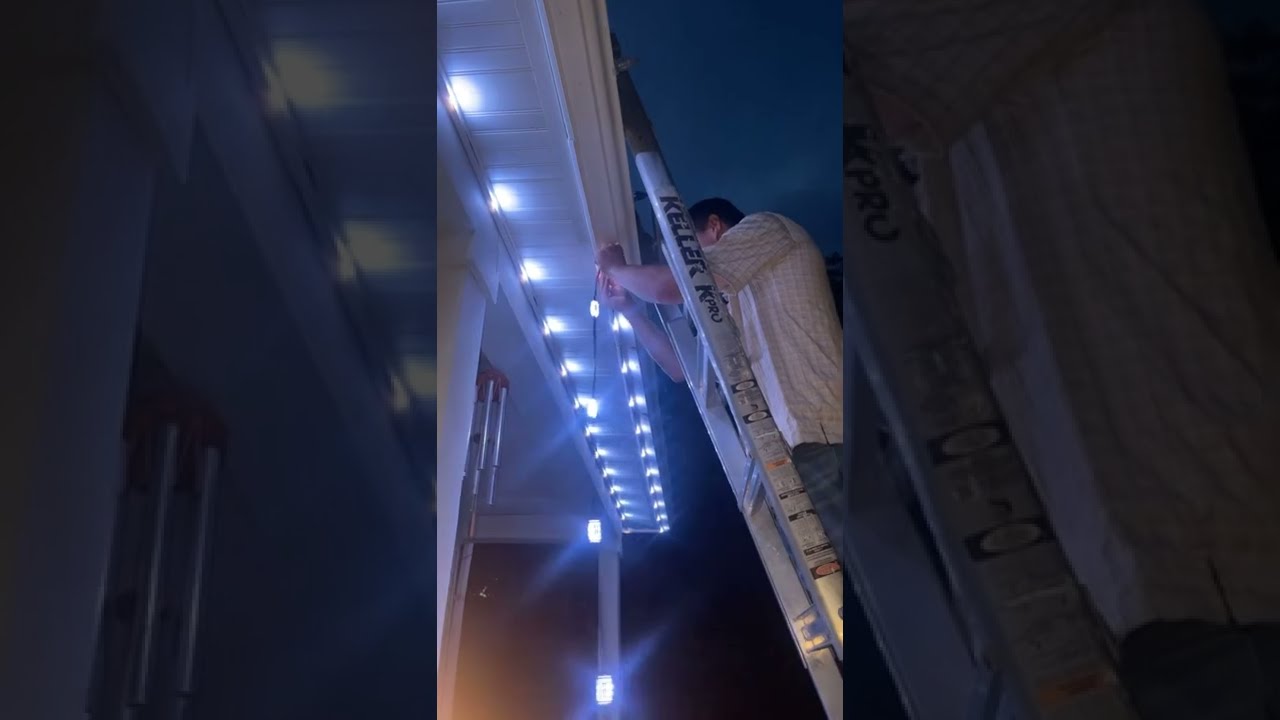
This is where several buyers undervalue the project. Permanent LED Illumination Installation sits in an in-between group. It involves electrical understanding, but it also requires surface carpentry reactions, visual judgment, and weatherproofing discipline.
The wiring has to be secured, the infiltrations have to be secured properly, the controller needs a clean place, and the visible components need to align with the home. Even a practically practical system can look negative if the channels are misaligned, the spacing is inconsistent, or the color temperature clashes with the house.
A tidy install generally includes mindful shade matching of the track or mounting channel, neat cable administration, thoughtful changes around edges, and a power arrangement that does not create a tangle of revealed cabling. The best teams treat the front elevation of a residence with the same care a coating trim woodworker would. They recognize that a quarter inch off at one point becomes glaringly obvious when the line runs 40 feet throughout a roof edge.
It is also worth asking just how the system handles future solution. Can an unsuccessful area be replaced without abusing large areas? Are private modules obtainable? Is the controller proprietary? If the installer vanishes in three years, can one more business service the product? Those questions matter more than many homeowners realize.
Not all lighting systems are constructed the same
From the road, lots of systems look comparable in the beginning look. Up close, and with time, the distinctions become apparent. The primary variables are the light components, the track or real estate, the control system, the power monitoring, and the serviceability.
Some items focus on near invisibility during daytime. Others are bulkier and less complicated to detect. Some use smooth dimming and sophisticated organizing. Others rely on simpler presets. Some systems are bright enough to make dramatic color scenes across large homes. Others are much better matched for softer accent effects.
Brightness can be a trap. More brightness is not https://ulstandardsledequipment774.novacrestiq.com/posts/irreversible-led-lights-installation-a-smart-upgrade-for-year-round-aesthetic-charm constantly far better. On numerous homes, specifically in mature neighborhoods, excessively intense output can make the façade appearance rough. It can also aggravate neighbors if the system is sharp or set poorly. A superior result usually originates from equilibrium, not maximum output.
Color top quality is similarly crucial. Warm white modes differ widely in between systems. Some cozy settings look inviting and upscale. Others wander as well yellow, also brownish-yellow, or unusually sterilized. If your key non-holiday use is building lights, ask to see the system in warm white after dark, preferably on a house similar to yours. Pictures seldom inform the complete story.
Then there is sturdiness. Outside illumination lives in warmth, cool, rainfall, UV exposure, dust, bugs, and occasional effect from windblown particles. The ranked life of an LED element may sound remarkable, however the weakest factor in reality is usually not the diode itself. It is the connection, driver, seal, housing, or control component.
The quote should answer greater than price
A house owner that obtains three quotes will typically see a surprisingly vast array. That void typically comes from one of 3 things: the product top quality is different, the range is various, or the installer's standards are different.
A low bid might just cover the front roofline, while another consists of dormers, garage peaks, entry details, and side returns noticeable from the street. One company may use a much more robust track system, include application arrangement and training, and offer a longer handiwork guarantee. One more may rely upon a basic mounting method that enters faster yet ages poorly.
Before comparing numbers, compare what is in fact being provided. Request clarity on these factors:
Which altitudes and architectural functions are included? What product and controller are being installed? How are cords hidden and penetrations sealed? What warranty covers materials, labor, and future solution calls? What happens if an area falls short outside the guarantee period?Those five inquiries punctured a great deal of sales language. They additionally disclose whether the company is utilized to handling educated buyers.
Understand the upkeep reality
The word "long-term" creates unrealistic expectations. It indicates the lights stay mounted year-round. It does not imply they will certainly never require attention.
Any outside system can need solution. Controllers can fail. Links can corrode. Power products can mature out. Specific light nodes can quit working. Software application can need updates. Tornado damages happens. Insect nests and particles can occasionally influence parts of the system, especially around soffits and overhangs.
A good system must minimize maintenance, however no straightforward installer must assure no maintenance for life. If somebody tells you the lights will be entirely maintenance-free for a years, I would beware. The much better promise is that the item is developed for outside usage, sustained by parts accessibility, and mounted in a way that makes solution manageable.
One homeowner I talked with after a winter season tornado presumed their entire system had failed because a number of areas went dark. The genuine problem was a single broken link at a vulnerable edge where ice and wind had serviced an exposed area. The repair work was simple, yet just because the installer had actually left sensible service access and documented the design. That type of insight matters.
App control works, yet use issues more than features
Modern systems commonly market the dream of endless customization. Technically, that can be real. You may obtain accessibility to scenes, patterns, lowering, scheduling, grouping, and calendar automation. For some buyers, especially families that appreciate transforming styles usually, that flexibility is a significant benefit.
But in technique, most homeowners clear up into a handful of preferred setups. They desire simple organizing, a reliable warm-white mode, and a couple of seasonal presets that do not require fifteen minutes of application fiddling. A sleek application with a high discovering curve becomes an uniqueness fast.
Ask for a real-time trial. See just how quickly you can change in between scenes, produce a timetable, lower the lights, and conserve a custom fave. If the interface feels clumsy throughout a sales demo, it will not feel much better later.
Also ask whether the system depends upon cloud gain access to, whether it still works if your net goes down, and just how software assistance is dealt with. Smart-home functions are wonderful up until they develop a new layer of fragility.
Daytime look separates the sleek tasks from the regrettable ones
A permanent lights system spends much more hours off than on. That suggests the daytime appearance is worthy of real attention.
On a well-executed home, the track mixes into the trim line and is hardly obvious from normal viewing angles. On a hurried install, you may see visible pucks, irregular spacing, sagging cords, dissimilar shades, or awkward transitions at edges. Those details can lower the home's look even when the lights are off.
This is especially important for house owners in areas with building criteria or home owners organizations. Even if color-changing lights are allowed, visible hardware might end up being a factor of friction if the system looks added. Request daytime images, not simply nighttime glamour shots. Even better, drive by a completed job.
I have seen purchasers fall in love with significant after-dark video clips online, only to hesitate once they see just how noticeable the equipment shows up completely sunlight. That is not a reason to avoid the product. It is a factor to check the coating quality with open eyes.
Warm white is not a minor detail
Many individuals think the shade options are the celebrity of the program. In long-term usage, cozy white frequently matters much more. If your system will invest the majority of the year in a white setup, you should be selective concerning just how that white view on your home.
Classic Warm Soft Lights tend to flatter all-natural products, especially block, stone, stained timber, and darker paint shades. They generally really feel extra building and much less business. Cooler whites can work on some contemporary homes, however on lots of standard exteriors they feel raw and a little unwelcoming.
Brightness connects with shade as well. A beautiful cozy white can still look exaggerated if it is run too intense. Great installers will assist you call in output so your home glows as opposed to yells. That distinction is easy to miss in a display room and apparent on a silent residential street.
Budgeting for the project suggests assuming past the install day
Most house owners understandably begin with the mounted price. However to assess worth, it aids to consider what the system changes and what it adds.
If you presently spend for annual vacation light setup, elimination, and storage space, the long-lasting mathematics might be much more positive than it initially shows up. In numerous markets, professional seasonal lighting can cost a meaningful amount annually, especially on larger homes. Over several periods, the gap between short-term service and permanent setup narrows.
Still, long-term systems are not a guaranteed cash saver for everybody. If you have a tiny one-story home and you hang your very own basic lights in an hour, the financial case might be weaker. The decision may hinge extra on ease, appearances, and year-round use.
There can also be additional costs. Some homes require an outlet included a much better area. Others gain from trim repair service or painting before installment. If you want a whole-home strategy that includes yard structures, patios, or detached garages, extent development can transform the budget plan quickly.
The smartest buyers choose very early whether they desire a marginal front-facing plan or a more complete building style. Both can be legitimate. Issues typically arise when a person attempts to squeeze a full-home vision into a front-only budget plan and ends up discontented with the result.
Permits, power, and community rules deserve inspecting early
Not every jurisdiction deals with these systems similarly. Depending upon the product and the electric job involved, a license might or may not be required. That is something the installer ought to have the ability to discuss plainly. If a new committed electrical outlet, low-voltage transformer, or hardwired part belongs to the strategy, code conformity matters.
Power source positioning should have more thought than it normally obtains. A surprise, obtainable, weather-appropriate place for the controller and power parts makes ownership less complicated. A poor place can result in hassle concerns, uncomfortable service calls, or visible tools clutter.
Neighborhood guidelines matter as well. Some house owners associations are relaxed concerning long-term outside illumination as long as it stays very discreet and seasonally proper. Others have stricter guidelines about noticeable components, brightness, or operating durations. It is much better to have that conversation prior to installation than after a next-door neighbor complains.
How to tell if an installer recognizes their craft
A brightened sales pitch does not guarantee a refined outcome. In this classification, experience shows up in the information. Solid installers ask useful questions, discuss constraints, and prevent making every home fit the same package.
Here are a few indicators you are speaking with the appropriate company:
They review your home's design prior to pushing product features. They reveal finished jobs in daytime and at night. They clarify solution procedures, not simply guarantee terms. They talk honestly concerning where the system ought to and should not be installed. They offer advice on tasteful programming, not simply optimal effects.That last factor issues more than numerous customers anticipate. An experienced installer has seen enough homes to recognize when less is much more. They can help you produce a design that feels incorporated with your home as opposed to taking on it.
The best financial investment is the one that matches your habits
Some house owners utilize their system each week. Others light it up heavily from October with January and just sometimes the rest of the year. Neither pattern is wrong, yet it must influence what you buy.
If you like regular seasonal changes, amusing, and app personalization, a feature-rich system may be worth the premium. If you mainly want to quit hanging Christmas lights and periodically run warm-white roofline lights, a simpler setup may match you much better. The most pricey alternative is not immediately the smartest one.
The exact same goes for scope. Lights every height, return, and architectural line can look remarkable, however not every home gain from complete coverage. A refined front altitude with balanced lines commonly looks better than an overlit house that lays out every readily available edge.
That is the typical string in excellent long-term lighting choices. The best results originate from matching the system to your home, the property owner, and the means the lights will in fact be used.
Permanent Vacation Lights can be a genuinely rewarding upgrade. They can save time, minimize seasonal hassle, improve aesthetic allure, and include a versatile outside lights layer that many property owners wind up delighting in more than expected. Yet they award cautious acquiring. Product high quality, daytime appearance, setup standards, solution gain access to, and color top quality issue a minimum of as long as the application and the holiday presets.
If you approach the decision like a long-term outside renovation instead of a joyful device, you are far more most likely to wind up with a system you still value years from now.